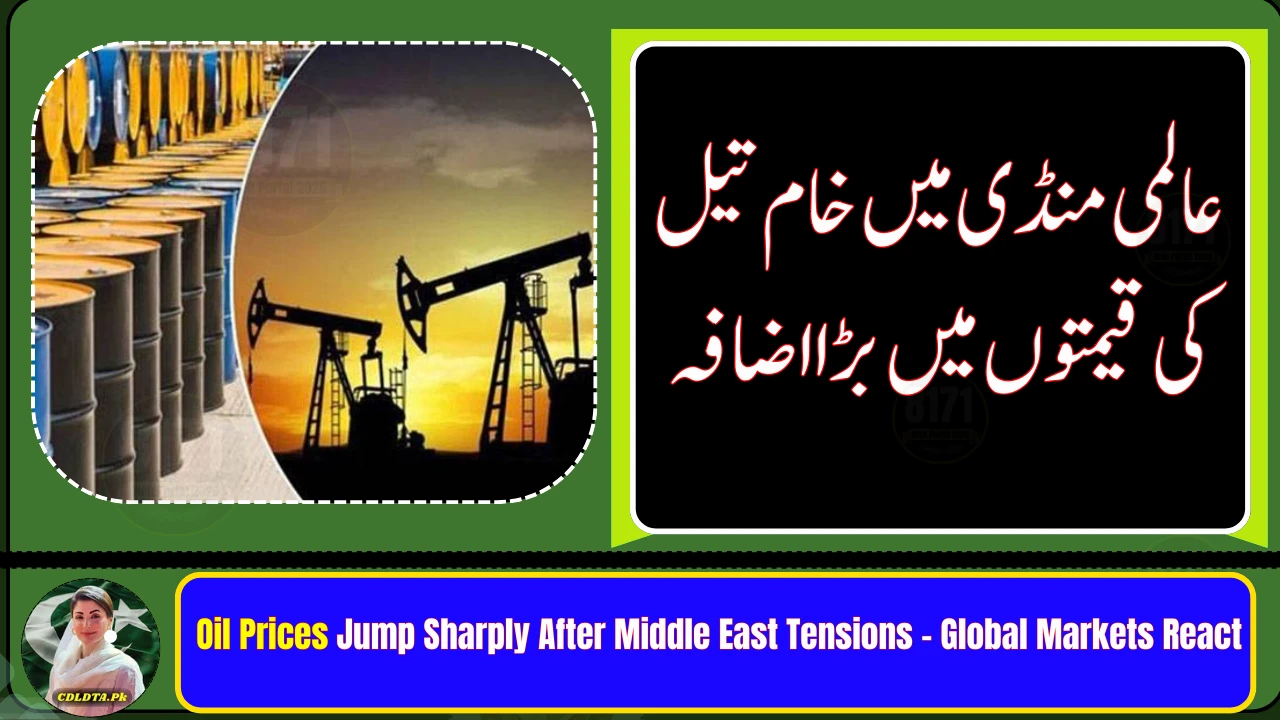
International crude oil prices have recorded a sharp increase following renewed geopolitical tension in the Middle East.
According to global market data, WTI crude oil jumped by $4.59, reaching $64.19 per barrel, while Brent crude oil increased by $2.86, climbing to $70.35 per barrel.
 Xiaomi 17 Ultra Global Launch Confirmed – Pakistan Release Expected Soon
 Meta to Shut Down Messenger App Completely – Deadline Announced
Market analysts link the sudden spike to escalating tensions between Iran and the United States, which have raised concerns about supply disruptions in global energy markets.
Latest Oil Price Update
West Texas Intermediate (WTI)
-
Increased by: $4.59
-
New price: $64.19 per barrel
Xiaomi 17 Ultra Global Launch Confirmed – Pakistan Release Expected SoonMeta to Shut Down Messenger App Completely – Deadline Announced Gold Price Jumps by Rs. 7,100 Per Tola – Fresh Record in Pakistan
Brent Crude
-
Increased by: $2.86
-
New price: $70.35 per barrel
Brent crude is the international benchmark used for pricing oil globally, while WTI reflects US market rates.
Why Are Oil Prices Rising?
Experts suggest that geopolitical instability in the Middle East directly impacts oil markets because the region supplies a significant portion of the world’s crude oil.
Tensions between Iran and the United States have created uncertainty regarding:
-
Oil shipping routes
-
Supply chain stability
-
Potential sanctions
-
Regional security
Whenever supply risks increase, global markets react immediately by pushing prices higher.
What This Means for Pakistan
Pakistan heavily depends on imported petroleum products. A sustained increase in global oil prices can directly impact:
-
Petrol and diesel prices
-
Electricity generation costs
-
Inflation levels
-
Transportation expenses
-
Industrial production
If international crude prices remain elevated, there is a possibility that local fuel prices could rise in the next government price review.
Could Petrol Prices Increase in Pakistan?
While no official announcement has been made yet, rising Brent prices typically influence Pakistan’s fuel pricing mechanism.
If the upward trend continues:
-
Import bills may increase
-
Government subsidy pressure may rise
-
Consumers could face higher pump prices
However, final decisions depend on exchange rates, government policy adjustments, and global price stability.
Global Market Reaction
Energy markets worldwide are closely monitoring developments in the Middle East. Investors are also watching:
-
Diplomatic negotiations
-
Military movements
-
OPEC+ production strategies
-
Global demand forecasts
Even short-term geopolitical signals can cause immediate price volatility in oil futures trading.
Why Oil Price Volatility Matters Globally
Crude oil is one of the most sensitive commodities in the world economy. Even minor disruptions in supply expectations can lead to sharp price swings.
Higher oil prices can:
-
Slow economic growth
-
Increase transportation and manufacturing costs
-
Fuel global inflation
For developing economies like Pakistan, sustained oil price increases can significantly affect macroeconomic stability.
Xiaomi 17 Ultra Global Launch Confirmed – Pakistan Release Expected SoonMeta to Shut Down Messenger App Completely – Deadline AnnouncedGold Price Jumps by Rs. 7,100 Per Tola – Fresh Record in Pakistan POCO X8 Pro Max – Full Leaks, Specs & Expected Global Launch Details
 Home Charging System Launched for Electric Vehicles in Pakistan
 Electricity Prices Set to Rise Again – Government Prepares Fresh Per Unit Increase